My Dog Thinks I’m Cool T-Shirt
A Designer’s First Look: Playful, Not Precious
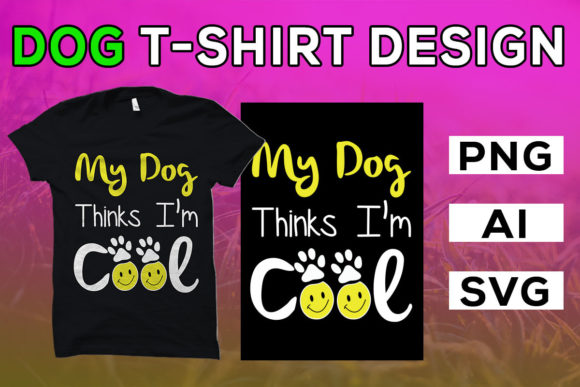
When My Dog Thinks I’m Cool T-Shirt landed in my inbox, I didn’t open it expecting fine-line calligraphy or minimalist elegance. I opened it expecting charm—and it delivered. The design leans into warm, confident whimsy: bold lettering with a relaxed rhythm, a stylized dog silhouette (not overly detailed, not cartoonish), and intentional spacing that breathes on fabric. It doesn’t try to be everything—it’s a focused, friendly statement. That clarity matters. In embroidery, especially for small-batch makers or Etsy sellers juggling dozens of listings, a design that communicates instantly—without visual noise—is half the battle won.
Real-World Test: Embroidering a Cotton Canvas Tote for a Local Dog Rescue Pop-Up
Last week, I stitched My Dog Thinks I’m Cool T-Shirt onto a natural canvas tote for a weekend craft fair booth supporting a local rescue. Why this design? Because it lands right between “I love dogs” and “I have taste.” It’s not cutesy enough for toddlers, not edgy enough for streetwear—but perfect for adults who wear their affection lightly. On the tote, the lettering held its shape beautifully in satin stitch, and the dog icon read cleanly at 3.5 inches wide—even with moderate thread tension and standard tear-away stabilizer. No puckering. No lost detail. That’s rare in editable graphics marketed broadly: many sacrifice stitch integrity for scalability. This one didn’t.
Where It Shines (and Where It Asks for Thought)
- Custom apparel & sweatshirt embroidery: Works best on mid-weight cotton or cotton-blend tees and fleece-lined hoodies. The letterforms have generous stroke width—no fragile serifs or hairline breaks—so they translate reliably in fill and satin stitches.
- Embroidered patch & tote bag design: Excellent candidate for iron-on or sew-on patches. Its balanced negative space prevents overcrowding when stitched on textured canvas or denim.
- Baby embroidery & nursery decor: Use with care. While gentle in tone, the phrase reads as adult-humor—not baby-focused. Better suited for parent-facing items (nursery aprons, coffee mugs for new moms) than ones worn *by* infants.
- Holiday embroidery & personalized gifts: Strong seasonal flexibility. Swap thread colors for red/green or pastels—it adapts without redesign. Just avoid dense metallics; the layout isn’t built for high-stitch-count embellishment.
What Demands Attention Before You Stitch
This isn’t a “drop-in-and-go” embroidery file—though it’s labeled “100 Editable.” That means you’ll likely need to adjust settings based on your project. Here’s what I checked before stitching:
- Hoop size & stitch density: Preview the outline. If your version includes vector paths (common in editable graphics), confirm the widest element fits comfortably within your standard hoop—especially if embroidering caps or curved surfaces like bucket hats.
- Fabric texture & stability: On thin or stretchy knits (like lightweight tees), use cut-away stabilizer underneath. The design’s openness helps, but loose weaves can still distort letter spacing if under-supported.
- Thread color contrast: Test on both light and dark fabric mockups. The phrase relies on legibility—not shadow or gradient—so high-contrast pairings (navy thread on cream, white on charcoal) perform best. Avoid low-contrast combos like grey-on-heather grey unless intentionally muted.
- Small details & corners: Zoom in on the dog’s ear and tail tip. Are those crisp? If your embroidery file renders them as single running stitches or ultra-thin satin columns, they may vanish on coarse fabrics or after washing. Reinforce with a second pass—or simplify manually.
How It Shapes Perception—Beyond the Stitch
As a designer who sells embroidered goods and licenses digital assets, I pay attention to how a design affects buyer trust and handmade presentation. My Dog Thinks I’m Cool T-Shirt reads as confident, approachable, and commercially aware—not generic clipart. That lifts perceived value. When customers see it on a boutique sweatshirt or a custom apron at a farmers’ market, they don’t think “mass-produced graphic.” They think “someone chose this because it fits.” That subtle shift builds brand consistency across diverse products: a tea towel, a pillow cover, even a holiday ornament. It also encourages engagement—people smile, point, ask where it’s from. That organic reaction is gold for small shop owners and Etsy sellers building community.
Practical Notes Every Embroidery Designer Should Keep Handy
- Always test My Dog Thinks I’m Cool T-Shirt on scrap fabric first—especially if using textured, dark, or recycled materials.
- Review stitch density in your embroidery software. Overly dense fills may cause stiffness on lightweight garments; overly sparse ones may look washed out on dark backgrounds.
- Check licensing terms carefully. Since it’s labeled “for t-shirt, hoody, mugs, etc.,” confirm whether commercial resale of finished embroidered items is permitted—and whether attribution is required.
- For printable mockups or digital product previews, render it in black-and-white first. If it loses impact without color, reconsider thread choices or background contrast.
- Ask yourself: does this support my craft business goals? If you specialize in modern pet-themed goods or lighthearted lifestyle branding, yes—it’s a versatile anchor piece. If your niche is vintage botanicals or monogrammed heirlooms, it may sit awkwardly in your lineup.
Final Thought: A Design That Serves the Maker
My Dog Thinks I’m Cool T-Shirt isn’t revolutionary—but it’s reliable, expressive, and thoughtfully scaled. It respects the limits of real-world embroidery while leaving room for personality. For designers, Etsy sellers, and small shop owners choosing graphics for T-Shirt Designs and broader Graphics applications, that balance is everything. It saves time. It reduces rework. And most importantly, it lets your craftsmanship—not just the design—take center stage.