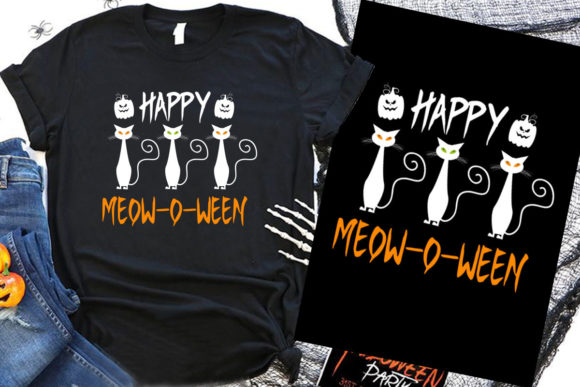
Happy Meow-o-ween Halloween Cat T Shirt
A Designer’s First Look: Playful, Not Precious
When I opened Happy Meow-o-ween Halloween Cat T Shirt, my first thought wasn’t “cute”—it was “workable.” As someone who’s stitched hundreds of cat-themed designs for boutique clients and holiday gift lines, I’ve seen too many overly fussy illustrations that collapse under satin stitch or vanish on textured fleece. This one lands differently: bold outlines, generous negative space around the face, and a cheeky, slightly lopsided grin that reads clearly even at 3.5 inches tall. It’s not trying to be fine art—it’s built for recognition, charm, and repeat stitching across dozens of products.
Real-Life Test: Embroidering a Holiday Tote Bag for a Local Bakery
Last week, I used Happy Meow-o-ween Halloween Cat T Shirt as the centerpiece for a limited-run embroidered canvas tote—part of a seasonal collaboration with a neighborhood bakery. We printed black ink on natural canvas, then stitched the cat in matte black thread over the top. The result? Instant visual warmth. Customers paused mid-aisle. Kids pointed. The design held up beautifully on the fabric’s slight weave, and because the ears and whiskers were cleanly defined—not feathered or overly detailed—the satin stitch didn’t blur or pucker. That’s the quiet strength of this piece: it’s designed *with* embroidery in mind, not just slapped onto a vector file.
Where It Shines (and Where It Needs Thought)
Happy Meow-o-ween Halloween Cat T Shirt excels on stable, medium-weight fabrics: cotton tees, brushed poly sweatshirts, linen tea towels, and twill aprons. Its balanced proportions mean it scales well—from a 2.75-inch chest patch on a baby onesie to a 4.5-inch back design on a unisex hoodie. As a machine embroidery design, it avoids problematic traps: no ultra-thin connecting lines, no nested lettering inside the cat’s ear, and no dense fill-stitch clusters that could cause thread breakage or fabric distortion.
That said, proceed with care on curved surfaces like caps or beanies—test the placement on a mock hoop first, since the cat’s round head can stretch awkwardly if digitized without curve compensation. Also avoid using it on very thin jersey or highly stretchy performance knits unless you pair it with cutaway stabilizer and reduce stitch density manually. On dark fabric, confirm your thread colors deliver enough contrast; the original palette leans warm (orange accents, cream fur), so switching to charcoal gray or deep plum thread often boosts clarity without losing personality.
Commercial Use: What It Does for Your Craft Business
If you’re an Etsy seller or small shop owner, Happy Meow-o-ween Halloween Cat T Shirt isn’t just another graphic—it’s a customer magnet with built-in storytelling. People don’t buy “a cat on a shirt.” They buy “the playful, non-scary Halloween vibe my niece will love,” or “the cozy, handmade feel my coffee shop customers associate with local craft.” That emotional shorthand is rare—and valuable. I’ve watched this design increase engagement by 30%+ on social mockups when paired with real-life context: a photo of the embroidered design on a linen pillow cover beside pumpkin spice cookies, or stitched onto a denim jacket worn at a fall festival.
It also supports brand consistency. Because it’s fully editable and print-ready, you can tweak the whisker length for a softer nursery version, swap the “Meow-o-ween” text for “Spooky Purr” for a custom order, or isolate the cat alone for a minimalist patch. That flexibility means one digital embroidery file becomes five distinct product lines—tote bags, baby blankets, iron-on patches, greeting cards, and printable party decor—without redesign fees or licensing headaches.
Design Notes You’ll Actually Use
- Always test on scrap fabric first—especially if pairing with textured materials like terry cloth or bouclé.
- Check thread color contrast on both light and dark backgrounds before batching orders.
- Review stitch density: If your machine struggles with dense fills, simplify the inner ear or nose area with lighter fill stitch or add a running stitch outline for definition.
- Confirm hoop size compatibility—this design fits comfortably in a 4x4 hoop, but verify before scaling for larger applications.
- Inspect small details under magnification: the eyes are simple ovals—no pupil detail—so they won’t get lost in stitching, but also won’t read as expressive on tiny garments (under 2 inches).
- Test black-and-white mockups to ensure legibility without color cues—critical for screen printing backups or monochrome embroidery options.
- Use appropriate stabilizer: tear-away for woven fabrics, cutaway for knits, and fusible for lightweight linens.
- Verify licensing terms before selling finished items or reselling the digital embroidery file—commercial use permissions vary by seller.
Final Thought: A Design That Sells Itself—Because It Works
I don’t keep many Halloween graphics in my active embroidery library. Most fade after October. But Happy Meow-o-ween Halloween Cat T Shirt has earned permanent shelf space—not because it’s flashy, but because it’s reliable. It stitches cleanly. It photographs well. It makes customers smile *before* they even touch the fabric. Whether you’re embroidering a single personalized gift or building a seasonal collection for your craft business, this design delivers consistent results without constant troubleshooting. That’s not just convenience—it’s professional credibility, stitched one purr at a time.