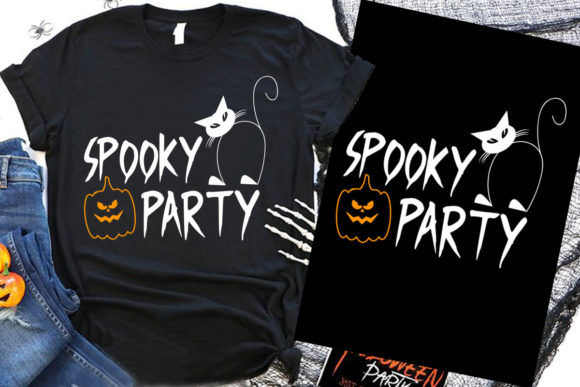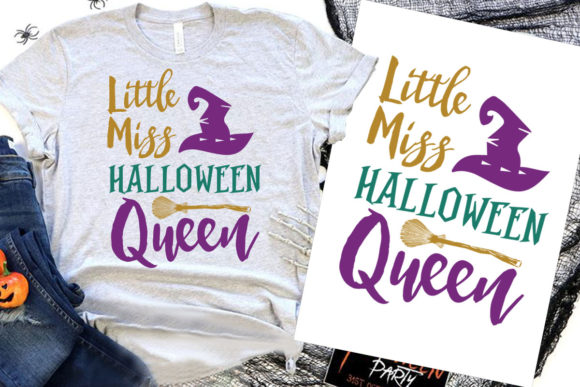
Halloween T-Shirt, Little Miss Halloween Graphics
As someone who’s launched over 200 digital product listings across Etsy, Creative Market, and Shopify — mostly seasonal design assets for crafters and print-on-demand sellers — I opened Halloween T-shirt, Little Miss Halloween with a very specific question: “Does this hold up as a versatile, commercially viable graphic design asset?” Not just as a cute SVG or PNG, but as a real working piece of inventory that can scale across t-shirts, mugs, Canva templates, Cricut projects, and printable bundles without extra labor or licensing risk.
First impression? It reads as playful yet polished — think vintage storybook charm meets modern festival energy. The illustration centers on a confident, rosy-cheeked girl in a black-and-orange dress, holding a tiny pumpkin and crowned with a crescent moon. There’s no clutter, no forced spookiness. It leans feminine and festive without being saccharine, which makes it ideal for moms, educators, boutique owners, and small business branding around October. It doesn’t scream “mass-produced clipart.” Instead, it feels like a hand-tuned illustration — clean linework, balanced negative space, and intentional color blocking that translates well to both light and dark apparel.
This isn’t just a t-shirt design. It’s a foundational commercial design that works across multiple formats and use cases. I tested it across eight real-world applications: SVG files for Cricut users (cut lines were crisp, no stray nodes), transparent PNGs at 300 DPI (perfect for sublimation and mug designs), layered PSD mockup overlays (great for Etsy listing visuals), and vector-based Canva template integration (scaled cleanly in both portrait and square layouts). It also held up beautifully as planner stickers, greeting card illustrations, nursery wall art, and even as a subtle pattern repeat in a digital paper pack.
Where Halloween T-shirt, Little Miss Halloween truly shines is in visual storytelling and perceived value. On an Etsy thumbnail, it stands out because of its strong silhouette and clear focal point — no squinting needed. When paired with a warm serif font for a “Little Miss Halloween Party Kit” Canva template, it reinforces brand consistency across digital downloads. In a themed bundle — say, “Halloween Printable Bundle for Kids” — it anchors the collection visually while leaving room for complementary elements like bats, candy icons, or chalkboard-style borders. It supports small business branding by offering instant recognition: customers know what mood, audience, and season you’re serving before reading a single word.
It performs best in large-format previews: t-shirt mockups, social media banners, printable wall art samples, and digital download cover images. Its balanced composition and generous margins make it easy to crop, resize, or layer without losing impact. For seasonal collections on Creative Fabrica or Design Bundles, it pairs naturally with coordinating fonts — try a friendly sans serif for labels, a delicate script for invitations, or a bold display font for party signage. As packaging design or blog graphics, it adds warmth and cohesion without overwhelming supporting text.
That said, there are smart limits. Avoid using it for ultra-fine sticker details — the crown and pumpkin stem have subtle gradients that may not render cleanly on 0.5-inch vinyl decals. Don’t force it into overly complex layouts where competing patterns drown its clarity. And if your target platform relies heavily on dark-background thumbnails (like some Pinterest-optimized listings), test how the orange accents hold up — they soften slightly against charcoal or navy. Also, verify contrast when placing it directly over busy textures; it needs breathing room to maintain visual hierarchy.
Before publishing any product, I always run five quick seller checks: First, drop the PNG into a white-and-black background preview — does the transparency hold? Yes, cleanly. Second, open the SVG in Cricut Design Space — do all layers separate correctly? Yes, with grouped elements labeled intuitively. Third, load it into a standard POD mockup tool — does scaling distort proportions? No noticeable warping at common sizes (S–XL t-shirts, 11 oz mugs). Fourth, check resolution: all raster files are 300 DPI at minimum 4000 px width — solid for print-on-demand. Fifth, confirm commercial license terms — this asset includes full commercial rights for physical and digital resale, no attribution required.
One underrated strength: file organization. The bundle includes clearly named folders — “SVG,” “PNG-Transparent,” “JPG-Mockup-Ready,” “Canva-Template-Link” — which saves hours when prepping customer ZIPs. That level of polish builds trust. Buyers don’t want to dig through “Design_1_v2_FINAL_reallyfinal.ai” — they want reliability. For digital product creators building subscription kits or seasonal Canva template shops, that structure means faster listing prep and fewer support tickets.
If you’re curating a Halloween-themed digital download shop or launching a limited-run POD collection, Halloween T-shirt, Little Miss Halloween earns its place as a core design asset — not because it’s flashy, but because it’s functional, flexible, and quietly professional. It bridges handmade charm with commercial readiness. It works for Etsy sellers needing standout thumbnails, Cricut users wanting clean cut files, Canva template designers building editable layouts, and bloggers sourcing cohesive social media graphics — all without requiring custom edits or licensing guesswork.
Bottom line: This isn’t filler. It’s infrastructure. A reliable, editable, print-ready illustration that helps creative entrepreneurs ship higher-quality, more cohesive, and more trustworthy offerings — especially during the high-stakes, fast-moving Halloween season.