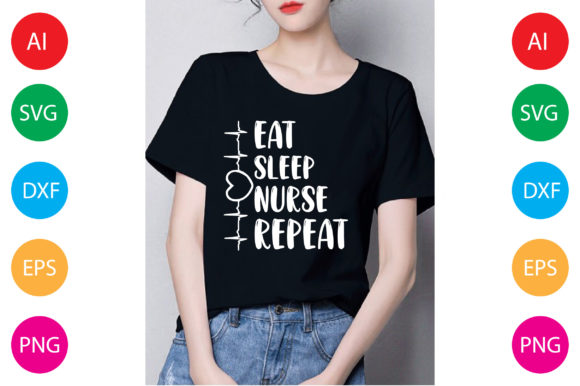
Eat Sleep Nurse Repeat
First Impressions: Friendly, Focused, and Ready for Real Fabric
When I opened the Eat Sleep Nurse Repeat files, what struck me wasn’t flashy detail—but clarity. This isn’t a design shouting to be seen from across a room; it’s a warm, confident nod between professionals. The clean sans-serif lettering, balanced spacing, and compact vertical rhythm make it feel intentional—not rushed, not overworked. It reads instantly, even at small scales, which is rare for text-based embroidery designs. As a designer who regularly tests files on everything from cotton poplin to fleece-lined sweatshirts, I immediately pictured it stitched onto a soft navy tote bag for a new grad nurse—practical, proud, and personal.
Fits Like a Well-Worn Scrub Top: Where It Shines in Real Projects
Eat Sleep Nurse Repeat works best where authenticity matters more than ornamentation. Think embroidered baby onesies (paired with a tiny heart or stethoscope motif), minimalist aprons for clinic gift shops, or crisp pillow covers for nursing school graduation gifts. It’s equally at home on a lightweight cotton tea towel for a hospital staff appreciation basket or as a subtle chest embroidery on a black unisex sweatshirt sold at a local craft fair. Because the design avoids fine serifs, tight kerning, or excessive flourishes, it translates cleanly into stitch—no jagged edges, no lost letters under dense fill stitch. For Etsy sellers listing custom apparel, this is low-risk, high-recognition design equity: buyers know exactly what they’re getting, and it delivers without surprise.
Where It Plays Well With Others—and Where It Needs Guardrails
This design thrives on stable, medium-weight fabrics: 100% cotton tees, canvas totes, twill caps (with proper hooping), and linen-blend pillow covers. On those surfaces, the letterforms hold shape, stitch density stays manageable, and thread coverage looks full—not sparse or muddy. But here’s where attention matters: avoid using Eat Sleep Nurse Repeat on highly textured knits (like bouclé sweatshirts) without extra stabilizer—it can blur letter definition. Likewise, skip ultra-thin poly-blend tees unless you test first; the design’s solid letter bodies may show through or pucker if tension isn’t dialed in. And while it’s perfectly legible on dark fabric, always preview your thread color choice against both light and dark backgrounds—especially for satin-stitched outlines that catch light differently.
Stitching It Right: Practical Notes Every Embroiderer Should Check
Before committing to a client order or batch production, run these checks:
- Test on scrap fabric—same weight and weave as your final product, with the same stabilizer you plan to use.
- Review stitch density in your embroidery software. If the file includes heavy fill areas (common in bold lettering), confirm it won’t overwhelm lightweight fabrics or cause puckering.
- Confirm hoop size compatibility. While the vector files suggest scalability, embroidery machines have physical limits—verify your largest intended version fits comfortably within your standard hoop.
- Inspect small details—especially the inner counters of “e”, “a”, and “o”. These can collapse or distort if digitized poorly or stitched too densely.
- Try black-and-white mockups before choosing thread colors. What reads clearly on screen doesn’t always translate to stitch clarity.
- Use appropriate stabilizer: cutaway for knits, tear-away for stable wovens, and fusible for layered items like patches or apron pockets.
More Than Just a T-Shirt Design—It’s a Branding Anchor
As a graphics-focused embroidery file, Eat Sleep Nurse Repeat punches above its simplicity. Its consistency across formats (SVG, EPS, AI, DXF, PNG, JPEG) means you can prep digital mockups fast, adapt it for vinyl cutting if needed, or layer it with simple icons for boutique packaging. For small shop owners building cohesive collections—say, a “Nursing Life” line featuring mugs, pins, and embroidered towels—this design becomes a reliable visual anchor. Customers recognize it. They trust it. It feels handmade without looking amateurish. That balance is hard-won, and Eat Sleep Nurse Repeat lands it quietly.
What It Adds to Your Finished Product
When stitched well, Eat Sleep Nurse Repeat elevates perceived value—not by complexity, but by confidence. A personalized gift with this design feels intentional, not generic. A boutique sweatshirt with clean, even stitching reads professional, not DIY. For craft business owners, that builds repeat trust. For Etsy sellers, it reduces buyer hesitation: the phrase is familiar, the execution is predictable, and the sentiment resonates deeply within its niche. It doesn’t try to be everything—it owns its space firmly, kindly, and clearly.
Final Thought: A Design That Earns Its Place
I’ve passed on dozens of “nurse-themed” embroidery files—too cutesy, too cluttered, or too fragile in stitch execution. Eat Sleep Nurse Repeat stands apart because it respects both the craft and the wearer. It’s not just a machine embroidery design; it’s a quiet affirmation stitched into fabric. Whether you’re prepping a holiday batch of embroidered caps, building a digital product bundle for fellow designers, or fulfilling a heartfelt custom request for a retiring RN, this one earns its spot in your working library. Just remember: review licensing before selling finished items or reselling the digital embroidery file itself, and always test before you commit. Good design deserves thoughtful execution—and Eat Sleep Nurse Repeat gives you every reason to deliver both.